After Avenue of the Giants we stopped in Crescent City for more Redwoods and some pacific beach exploring. Unfortunately, there were two major road construction projects between Crescent City and most of Redwoods State and National Parks. On the positive side our daughter Kellie and our two youngest grandkids, Rafael and River, joined us. Jedidiah Smith Redwoods State Park was mere minutes from our campground and we did a fantastic job exploring it.
Stout Grove is possibly the world’s most scenic stand of redwoods. It is a smaller grove in Jedediah Smith Redwoods State Park that has been left mostly untouched. Just the path and minimal safety barriers exist giving it a more wild feel.
Coast redwoods reproduce in two ways. The first is through seeds. During the wet season, the coast redwoods produce cones, which carry hundreds of thousands of seeds. These seeds are then released during the dry periods onto the forest floor, where just a tiny fraction take hold and grow into new trees.
The other way that coast redwoods reproduce is by sprouting from their extensive shallow root structure. These young sprouts get a ‘head start’ from the nutrients of the mature tree and surrounding root structure.
When a mature coast redwood is cut down – or falls down for some other reason, such as windthrow, or burns – its roots will usually begin to resprout from the roots around the stump, often in a near-perfect circle. Over time, the stump will decay and disappear, leaving only the clearing with the circle of younger trees around it. And then you have a fairy ring.
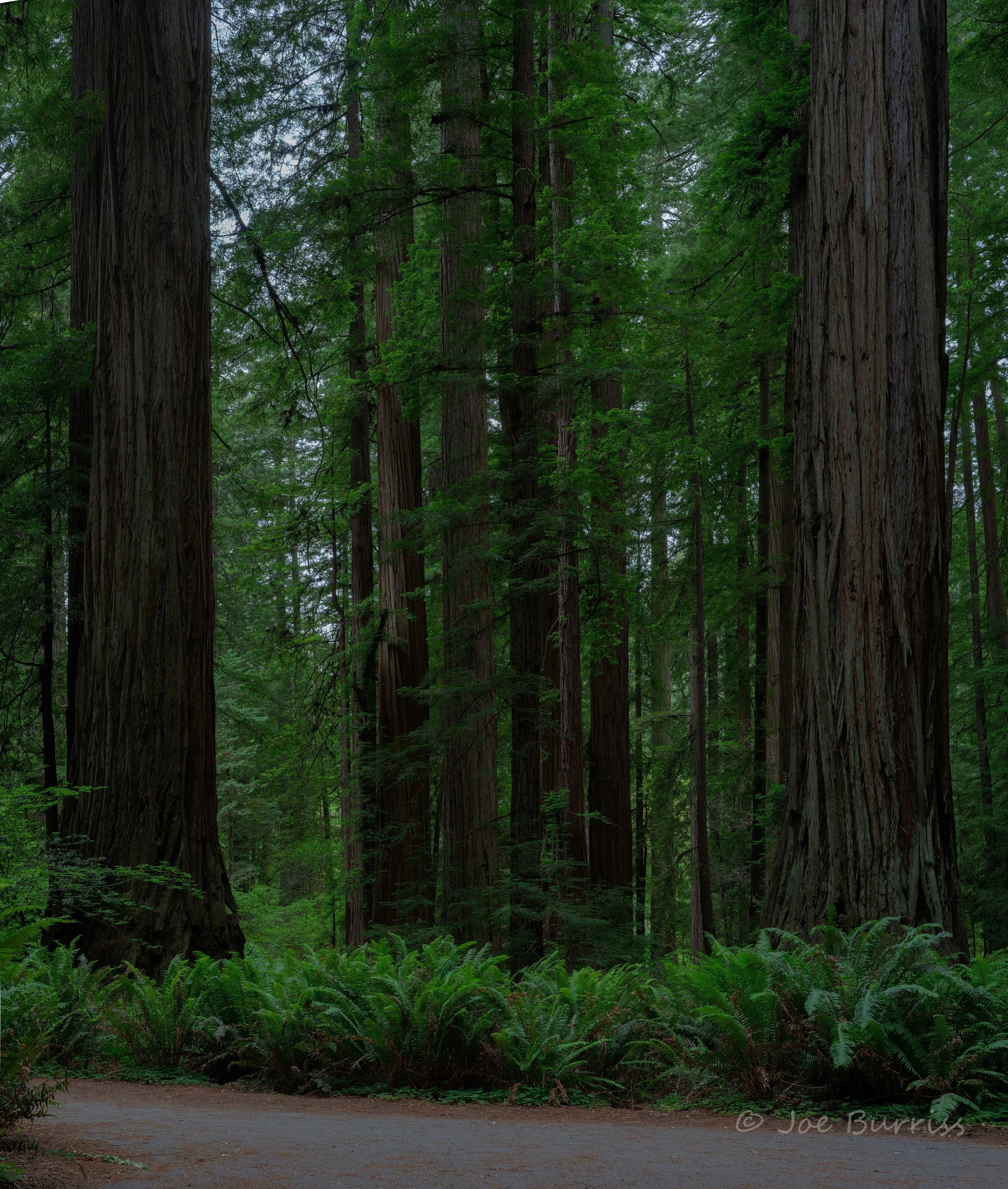
I think what makes Stout Grove beautiful is the carpet of ferns covering most of the ground between trees with minimal other vegetation. In the center of this photo is a a fairy ring.
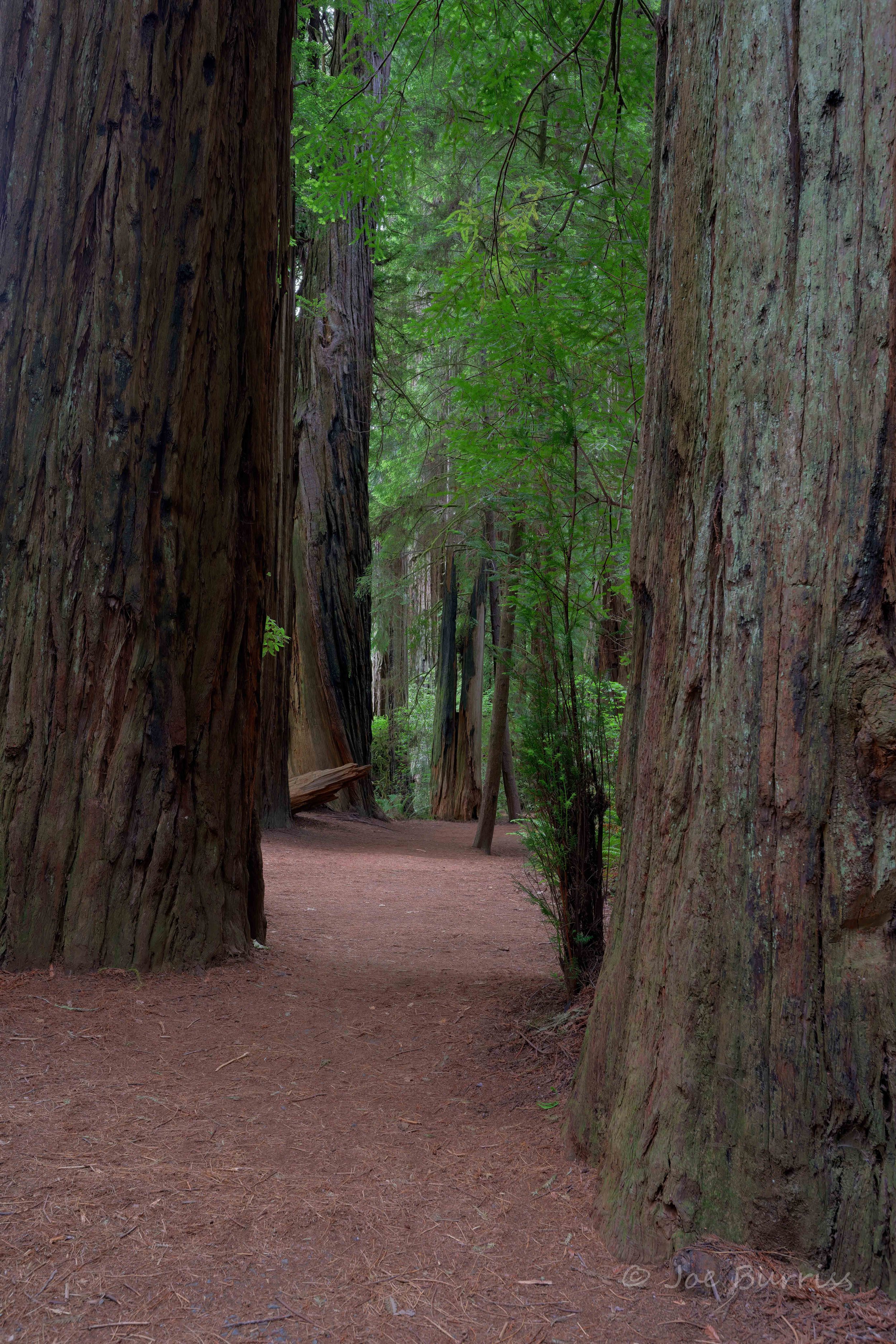
Typical Stout Grove path.
Redwood snags are standing dead or dying trees that remain upright after losing their upper branches or crowns. They serve as vital "wildlife hotels", providing perches for raptors and deep cavities for nesting birds and small mammals.
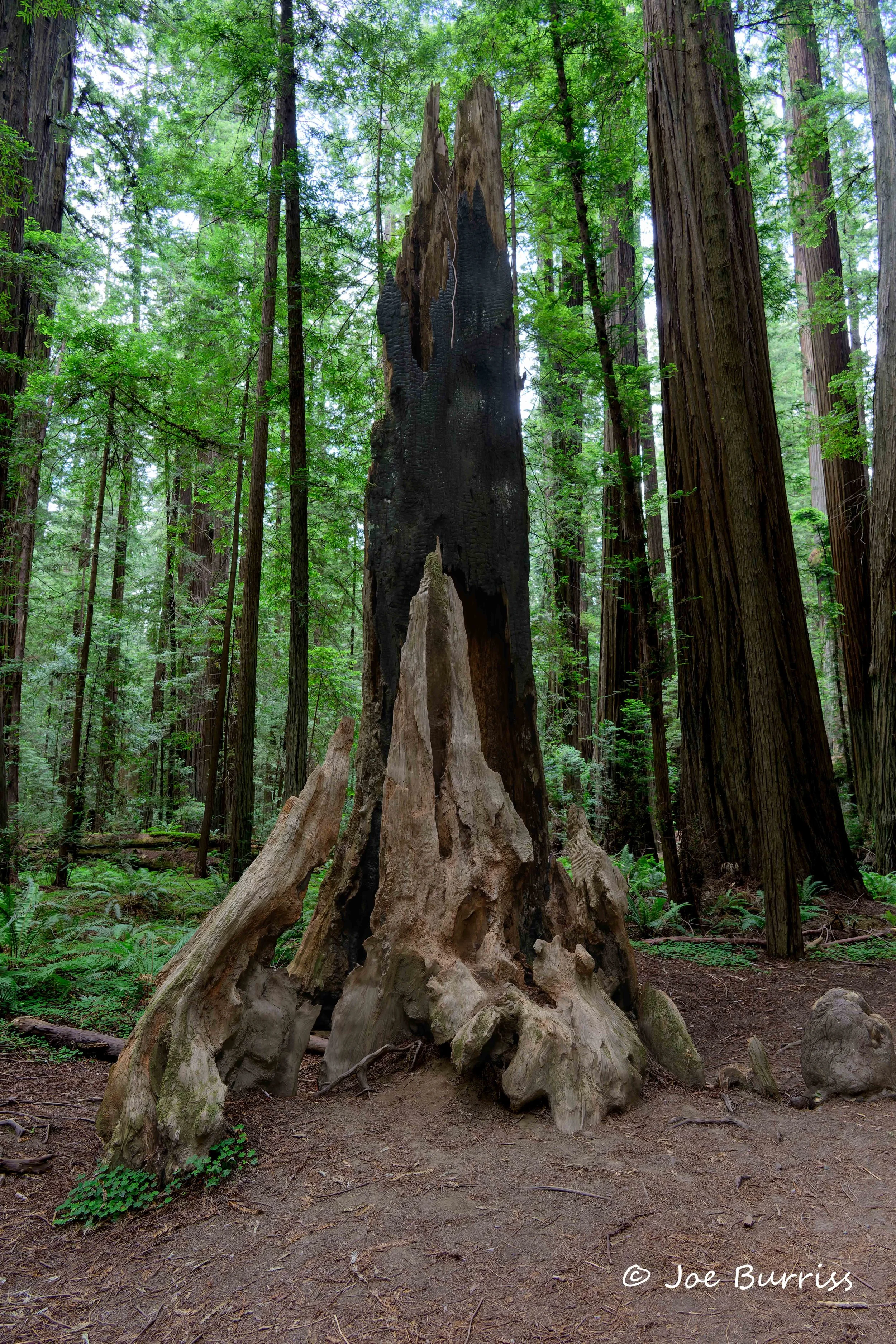
Ancient snag from a fire.
In dense, old-growth temperate rainforests (such as those along the Northern California coast), a fallen redwood creates a vital opening in the forest canopy, allowing precious sunlight to reach the dark forest floor. The massive trunk, now called a nurse log—which can take up to 500 years to fully rot—absorbs rainwater like a sponge, providing a nutrient-rich and elevated perch for seeds to germinate without having to compete with thick underbrush or deal with germs in the soil.
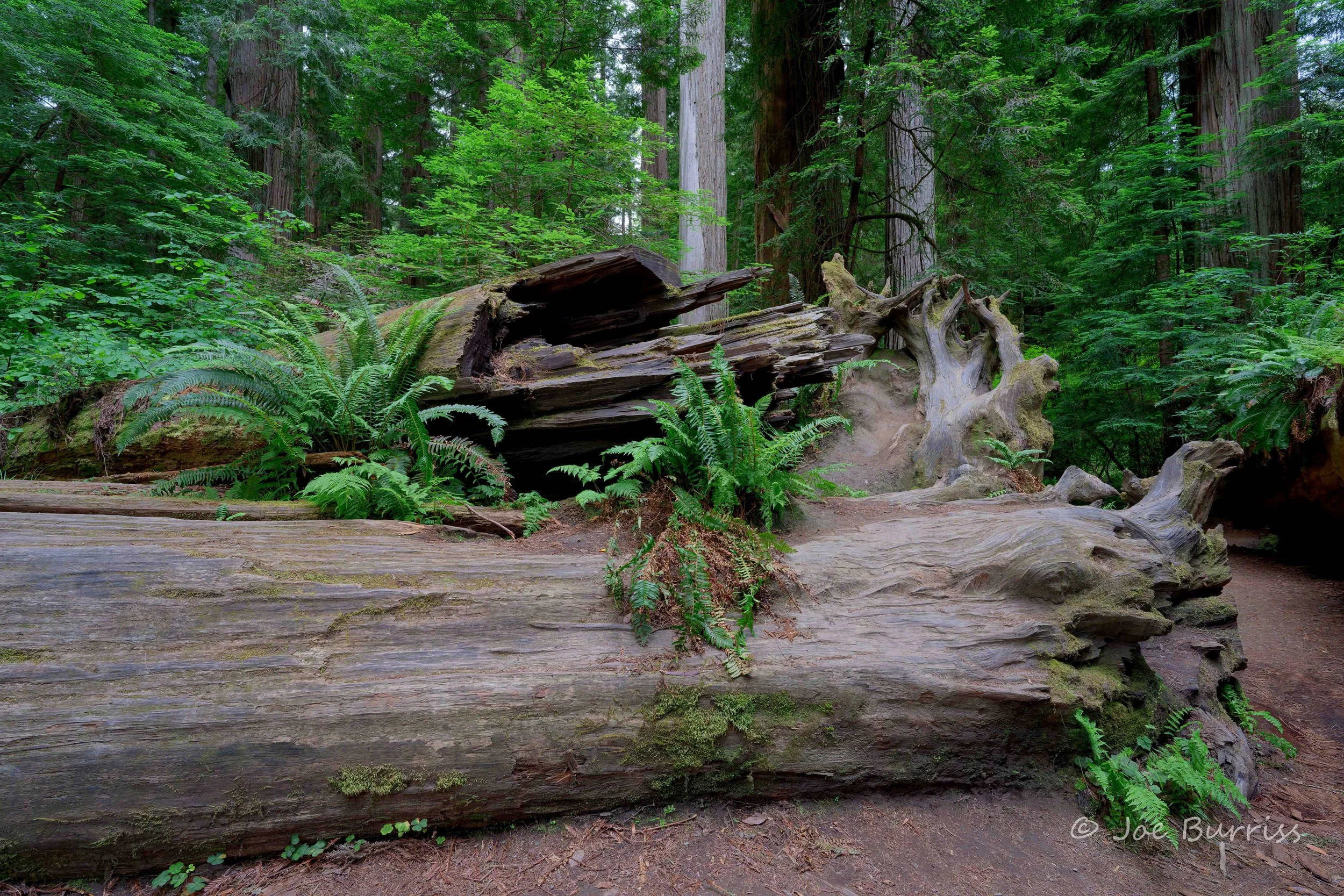
Nurse log just beginning to decay.
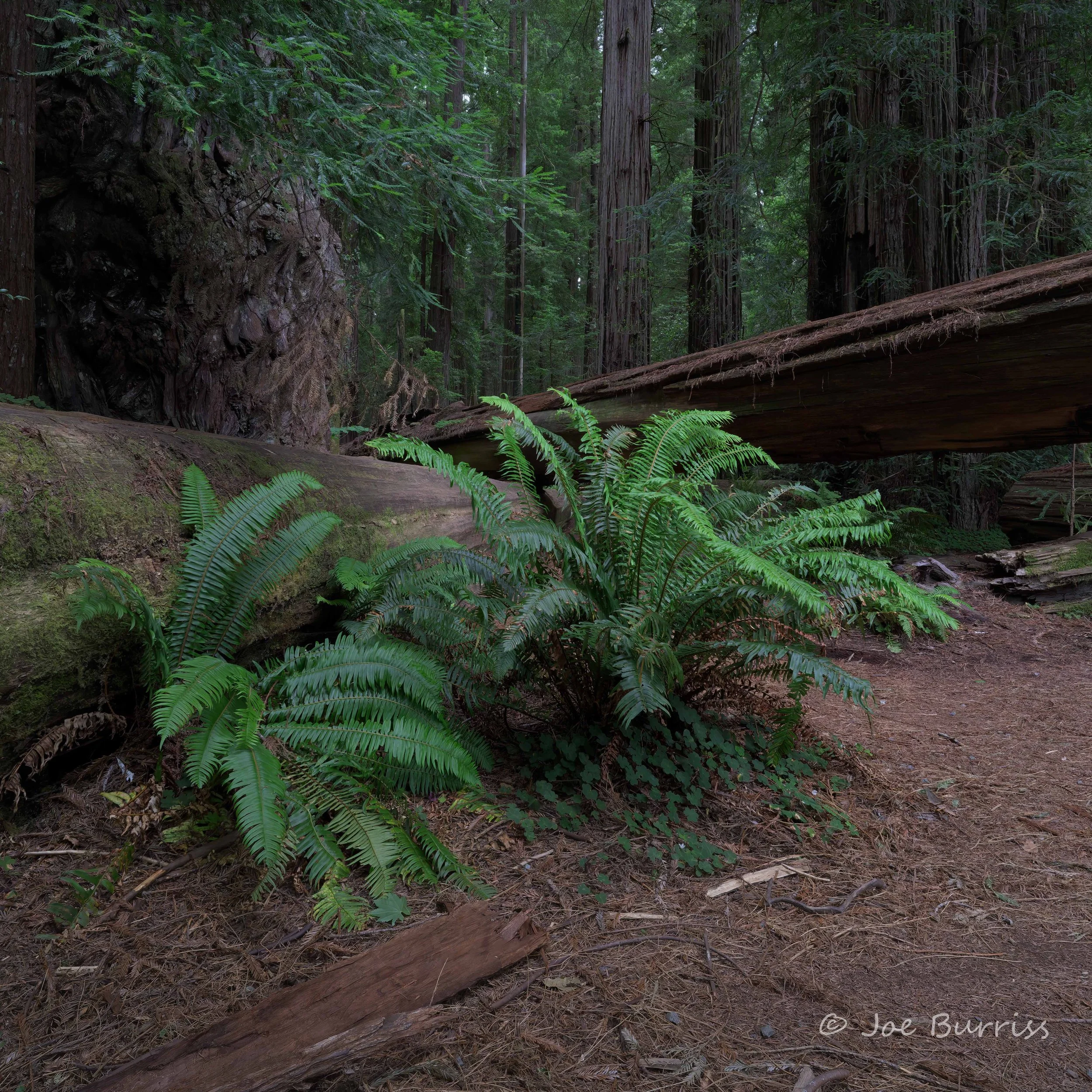
I just like ferns.
